

The Automotive Shift: From Stamping to Giga Casting
The automotive industry's twin drivers—electrification and cost pressure—are forcing a fundamental architectural redesign. The industry is rapidly moving toward structural simplification, prioritizing integrated, complex components over multiple stamped parts. This trend, epitomized by the rise of Giga Casting and the pursuit of full vehicle lightweighting, places immense pressure on one critical component: the die casting mold.
Traditional molds are struggling to keep up. They require higher thermal resistance, support rapid design variants, and, crucially, must be significantly larger. The key challenge for the entire lightweight supply chain is developing reliable, cost-effective solutions for large-format, high-lifetime, and highly thermally managed mold inserts.
The Fraunhofer ILT, MacLean-Fogg, and Toyota Breakthrough
A joint project between the Fraunhofer Institute for Laser Technology (ILT), material partner MacLean-Fogg, and end-user Toyota Europe is tackling these challenges head-on. Their focus: leveraging Laser Powder Bed Fusion (L-PBF) Additive Manufacturing (AM) to produce large, high-load die cast mold inserts.
The project successfully validated an AM-produced mold insert, fabricated using a new, AM-specific tool steel (L-40), which demonstrated significantly longer service life compared to conventional H13 molds in initial tests.
Overcoming the Size Barrier in AM Tooling
Manufacturing large die casting cores (up to 600×600mm2 or larger) with L-PBF traditionally faced two major hurdles:
Equipment Limitations: Standard L-PBF systems could not accommodate such large build volumes.
Material Stability: Traditional tool steels (like H11 or H13) risked cracking, thermal distortion, and insufficient mechanical properties when processed into massive components due to large internal temperature gradients.
To solve this, the team innovated on both the equipment and the material:
Scalable L-PBF System: Fraunhofer ILT upgraded its multi-laser L-PBF system, achieving a build envelope of 1000×800×350mm3. This gantry-style system allows for linear expansion of the build space under consistent process conditions.
Active Pre-Heating: A novel heatable substrate module, allowing the base plate to be heated up to 200∘C, significantly reduces thermally induced stress and cracking risk in large, complex parts (like the 20,000cm3 insert manufactured for this project).
AM-Specific L-40 Tool Steel: This material demonstrated significantly lower cracking tendencies during AM and subsequent heat treatment than traditional steels, maintaining high dimensional accuracy, hardness, and toughness.
The Power of Hybrid Manufacturing and Conformal Cooling
The core of the value proposition lies in the ability to embed complex conformal cooling channels—structures impossible to achieve with conventional machining or brazing—directly into the mold core.
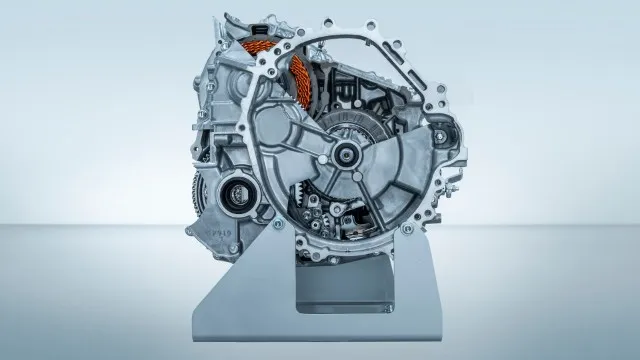
For Toyota’s production transmission housing on the Yaris Hybrid, the team employed a Hybrid Manufacturing approach:
Customized Preform: AM was built onto a customized, traditional preform that already contained vertical cooling channels.
Functional Integration: The costly L-PBF process was only applied to the areas requiring complex, free-form cooling structures (the core functionality).
This integrated cooling system:
Reduces Thermal Load: Precisely controls temperatures in high-stress areas.
Extends Mold Life: Early projects using similar AM molds showed a service life up to four times longer than conventional H13 molds.
Furthermore, this hybrid approach enables flexible manufacturing. Standardized functional modules (cores/inserts) with integrated AM cooling can be quickly swapped out on a long-lasting base platform, allowing the production line to switch between different cast part geometries without manufacturing an entirely new mold, saving significant time and cost.
The Road Ahead for Lightweighting
This project proves that Additive Manufacturing is no longer limited to small prototypes or low-volume parts. It is a viable, scalable solution for high-volume, high-load core components in the large-scale die casting ecosystem.
Key Takeaways for Automotive Suppliers and OEMs:
Durability and ROI: AM tooling dramatically extends service life, improving ROI despite the initial cost of AM.
Agility: Shorter development cycles and flexible changeovers accelerate time-to-market for new vehicle platforms.
Global Relevance: This model is highly relevant as China's New Energy Vehicle (NEV) market expands Giga Casting from rear floors to battery casings and front cabin assemblies, requiring ever-larger, thinner-walled, and more complex molds.