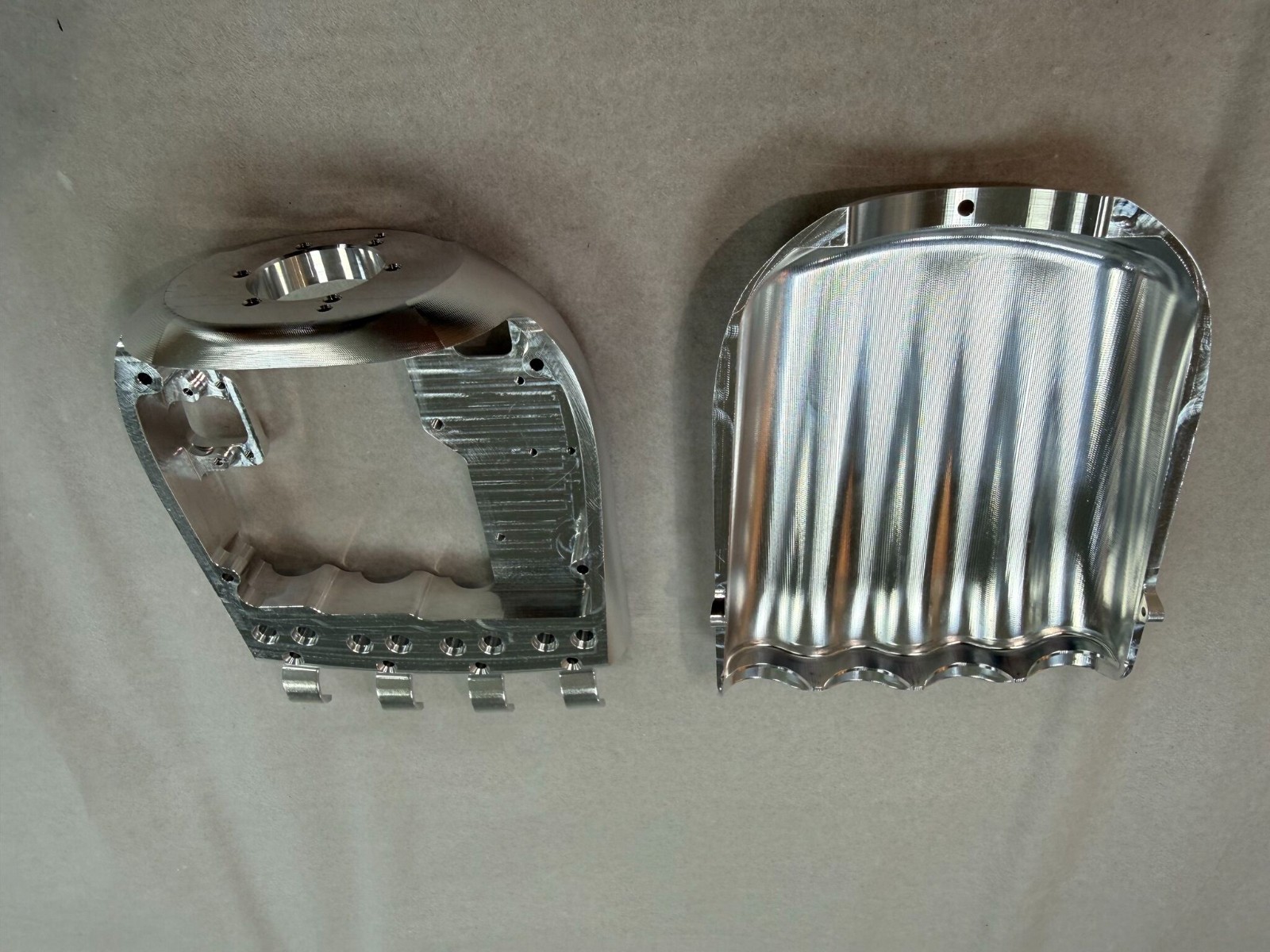
How 5-Axis Precision Machining Supports the hash Humanoid Robot Industry?
5-axis precision machining has become an essential manufacturing capability for humanoid robots.
As the industry moves toward lighter structures, tighter tolerances, and more complex designs, 5-axis technology provides the flexibility and accuracy needed for both prototype development and mass production.
1. Ensures High Precision for Complex Parts
Humanoid robots rely on components with multi-angle holes, curved surfaces, and deep cavities.
5-axis machining completes multiple operations in one setup, improving accuracy, consistency, and alignment across all critical structural parts.
2. Enables Lightweight and High-Strength Designs
Robots require thin-wall, pocketed, and hollow structures to reduce weight.
With adjustable tool angles and optimized cutting paths, 5-axis machining minimizes deformation, allowing for the reliable production of lightweight designs.
3. Handles Biomimetic and Complex Geometries
Many robotic joints and covers have organic shapes.
5-axis machining can produce these contours directly without splitting the part, improving structural strength and reducing assembly steps.
4. Improves Efficiency and Reduces Cost
Fewer setups mean faster machining, fewer fixtures, and lower risk of error.
This makes 5-axis especially suitable for small-to-medium batch production common in the robotics industry.
5. Supports High-Performance Materials
Materials like aerospace aluminum, titanium alloy, and stainless steel are frequently used in humanoid robots.
5-axis machining provides the accuracy and surface quality required for these high-strength materials.
We have sufficient 5-axis machines to support the